
High in the remote mountains of Ha Giang province, a site of national pride rises above the hills. Lung Cu Flag Point marks Vietnam’s northernmost frontier and offers not just spectacular scenery, but also a profound sense of cultural identity. For travelers tracing the legendary loop, this landmark provides a rare chance to see both breathtaking views and deep-rooted traditions.

The road to the summit
Reaching the tower is an adventure in itself. From Dong Van, the journey winds through dramatic limestone landscapes, rice terraces, and quiet villages. The road, though narrow, is scenic and filled with surprises, making the approach part of the reward. Many travelers combine this route with their broader exploration of the Ha Giang loop, ensuring that the climb to Lung Cu Flag Point feels like a fitting milestone.
A symbol of pride
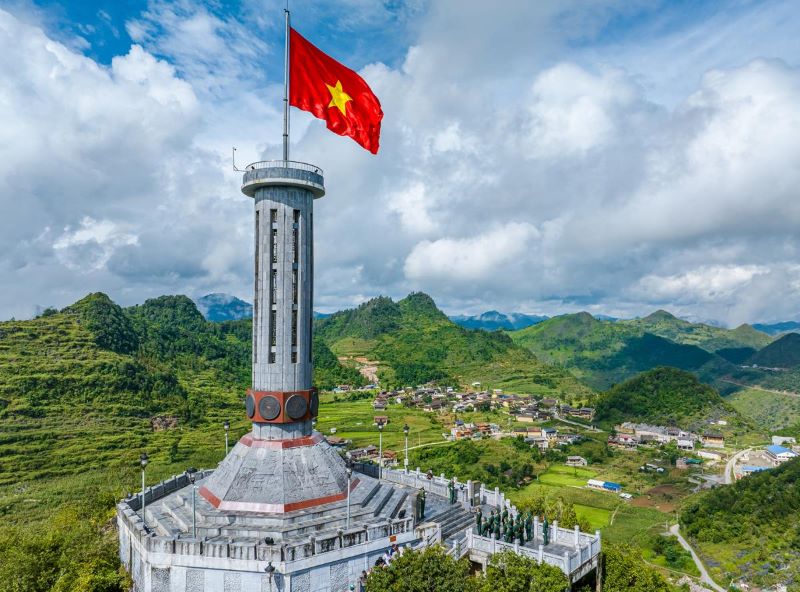
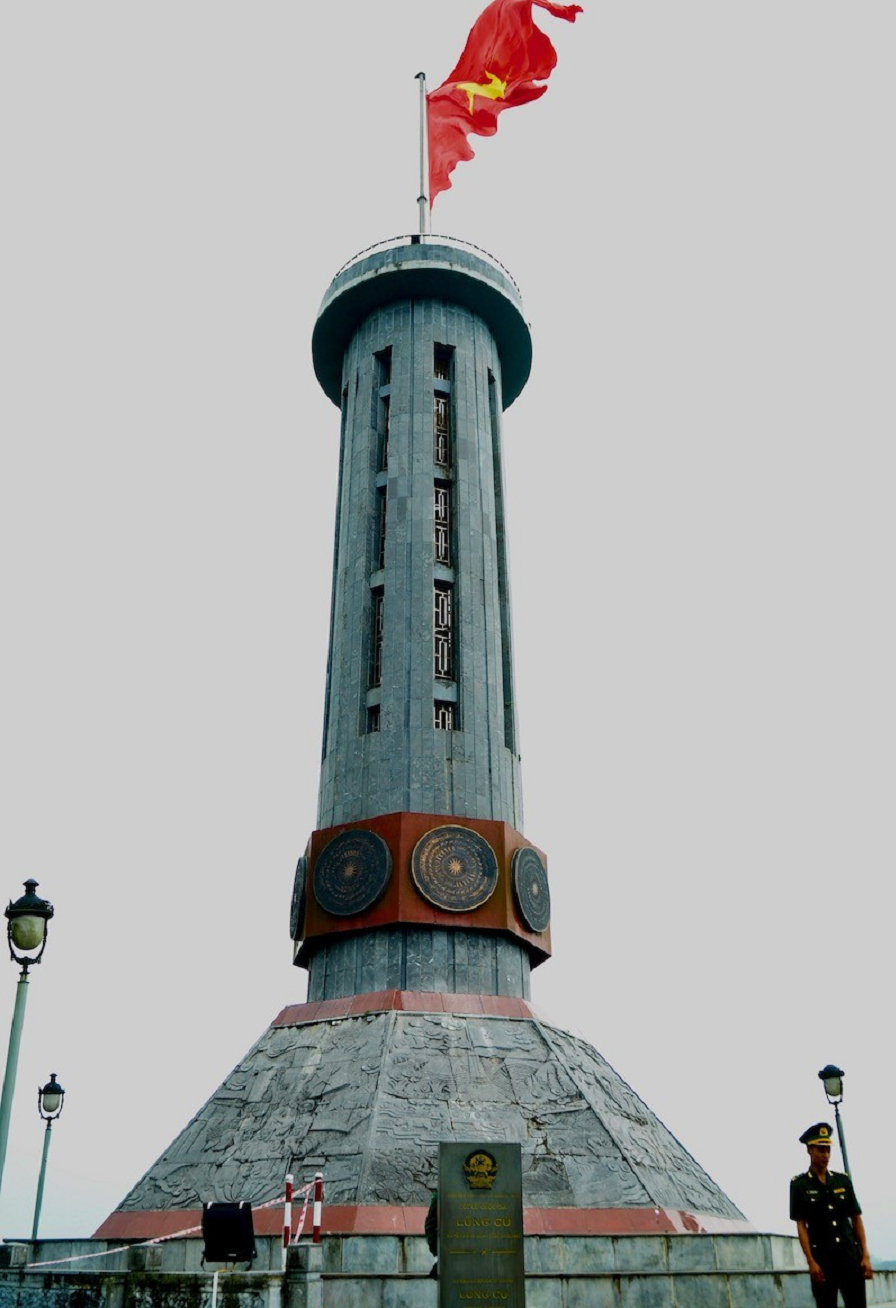
The tower, standing tall at 1,470 meters, is more than an architectural feature. At its peak, a vast red flag measuring 54 square meters flutters in the wind, representing Vietnam’s 54 ethnic groups. To reach it, visitors climb hundreds of stone steps, each one offering a stronger sense of anticipation. When the summit is reached, the flagpole becomes both a viewpoint and a symbol of unity.
Design with cultural meaning
The monument incorporates historical references into its design. Carvings of Dong Son drum motifs adorn the base, reflecting Vietnam’s ancient heritage. Inside, a spiral staircase leads visitors upward, offering glimpses of stone walls etched with symbolic patterns. The combination of cultural detail and sweeping architecture makes the site not just a landmark, but a lesson in history.
Views across two worlds
Standing at the top, travelers are rewarded with an extraordinary panorama. The rugged peaks of Ha Giang stretch endlessly to the south, while in the distance, small villages and farmland line the valleys. On a clear day, the horizon even extends into China, offering a rare chance to gaze across international borders. This dual perspective reinforces the tower’s unique position at the nation’s edge.
Traditions in nearby villages
Surrounding the tower are ethnic villages, home to communities like the Lo Lo and H’Mong. Their daily lives, marked by traditional homes and vibrant markets, give depth to the journey. Travelers often linger in these villages, sampling local dishes, learning about handwoven textiles, or simply watching children play in courtyards. These encounters transform a trip to Lung Cu Flag Point into an immersion in highland culture.
Where travelers rest and connect?
After days of exploring mountain passes and historic landmarks, travelers often look for a comfortable base. Staying in a Ha Giang city hostel provides not just affordability but also a sense of community. These hostels are known for their welcoming atmosphere, common spaces where riders share tips, and local hosts who help arrange tours to Lung Cu and beyond. Choosing a Ha Giang city hostel ensures easy access to transportation while offering a relaxing environment to recharge.

Seasons that shape the experience
Timing the trip greatly influences the journey. Spring paints the hills with blossoms, while autumn turns the terraces golden with ripening rice. Summer brings lush greenery, though occasional rains make the roads slippery, while winter offers clear skies and cooler air. Each season creates a distinct mood, making the visit to the flag point feel new every time.
Tips for making the most of the visit
Comfortable shoes are essential for the steep steps leading to the tower. Bringing water and snacks makes the climb easier, and starting early avoids the midday heat. Visitors staying in a Ha Giang city hostel often benefit from group trips organized by hostel owners, ensuring smoother travel and added companionship along the way.

Lasting impressions of the north
For many, the memory of climbing to Lung Cu Flag Point is one of the most powerful moments of their journey through Vietnam. It combines natural beauty, national pride, and cultural richness in one place. Paired with the warm hospitality of a Ha Giang city hostel, the experience becomes more than sightseeing—it becomes a story of connection, discovery, and lasting inspiration.


0 Nhận xét