
The far north of Vietnam has always drawn adventurous spirits. With its dramatic mountain passes, ancient traditions, and remote villages, Ha Giang feels like another world. At its very edge stands Lung Cu Flag Point, a monument that embodies both national pride and breathtaking scenery. Travelers who make the journey discover not only a powerful landmark but also a deeper understanding of the highlands.
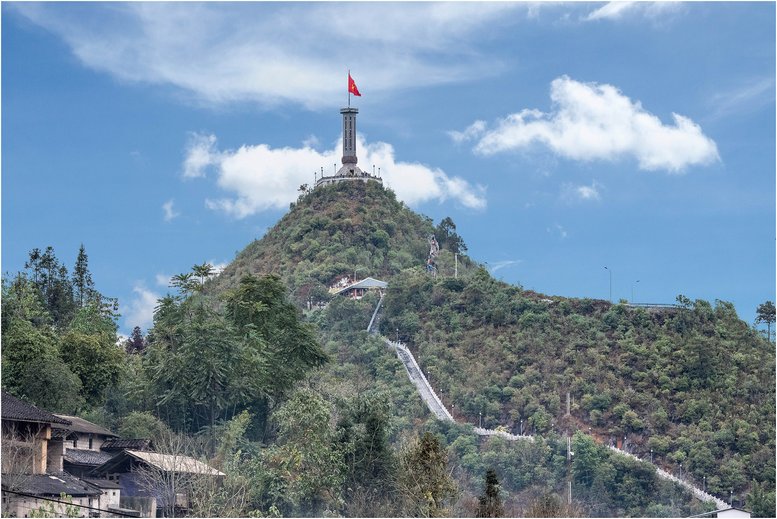
The path leading upward
Getting to the flagpole is part of the adventure. The road from Dong Van snakes through limestone cliffs, terraced rice fields, and tiny hamlets where life follows rhythms unchanged for generations. Each turn on the route heightens anticipation, making the climb feel like a reward long before the tower comes into view. Many riders on the Ha Giang loop treat this stop as a milestone, marking their progress into Vietnam’s northernmost frontier.
A monument of national spirit
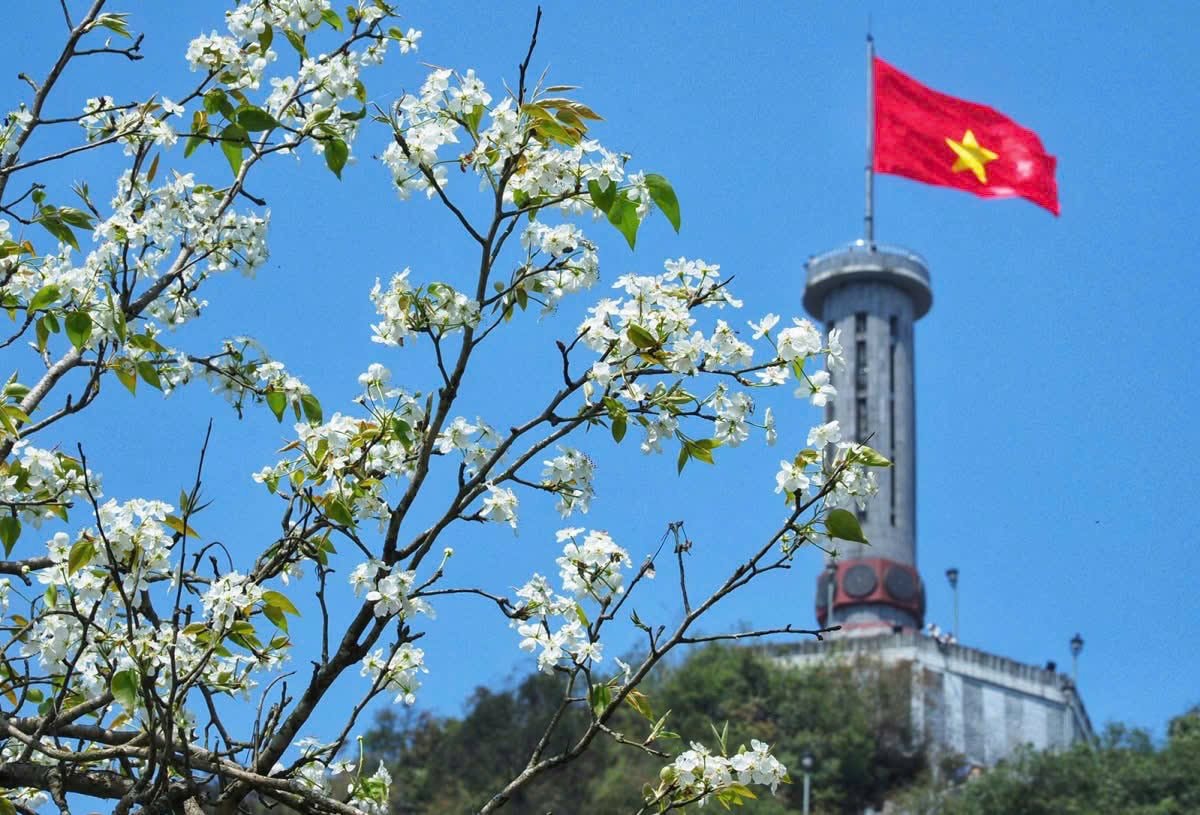
At 1,470 meters above sea level, Lung Cu Flag Point rises proudly against the sky. Its massive red flag, measuring 54 square meters, represents Vietnam’s 54 ethnic groups. Climbing the hundreds of stone steps to the base is a challenge, but standing beneath the towering pole is both humbling and inspiring. For locals and visitors alike, the site symbolizes unity and resilience at the country’s border.

Cultural details in design
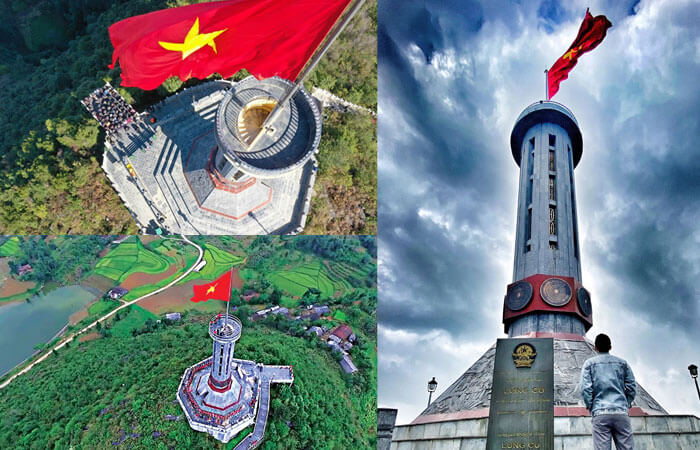
The tower itself is more than just stone and steel. At its base, motifs of Dong Son drums—icons of Vietnam’s ancient civilization—are carved into the structure. Inside, a spiral staircase winds upward, preparing visitors for the final reveal at the summit. These artistic touches tie the present-day landmark to centuries of history, reminding travelers that the site carries stories as well as views.
Vistas across two nations
From the top, the panorama is unforgettable. To the south, jagged peaks stretch endlessly, dotted with scattered villages. Looking north, the horizon extends into southern China, emphasizing the tower’s unique location at the frontier. On clear days, the scene is so expansive that it feels like standing between worlds, where nature and history converge in silence.
Life around the tower
The villages surrounding Lung Cu are home to the Lo Lo, H’Mong, and other ethnic groups. Their houses, often built with stone walls and wooden beams, reflect centuries of adaptation to the highlands. Visitors who take time to explore can witness weaving, farming, and festive markets that showcase vibrant traditions. These cultural encounters enrich the visit, making the flag point more than just a viewpoint.
Comfortable stays along the way
After long rides and climbs, travelers look for a welcoming place to rest. Staying in a Ha Giang city hostel offers both affordability and atmosphere. Hostels here often serve as hubs where adventurers share stories, trade travel tips, and organize group tours to landmarks like Lung Cu. With warm hosts, communal meals, and convenient services such as motorbike rentals, a Ha Giang city hostel becomes more than accommodation—it becomes part of the journey.
Choosing the right season
The experience of visiting changes with the time of year. Spring brings delicate peach blossoms across the hillsides, while summer is marked by lush greenery. Autumn transforms the rice terraces into golden waves, and winter delivers crisp skies that reveal the clearest views from the tower. Each season frames Lung Cu Flag Point differently, ensuring that no two visits feel the same.
Tips to enhance your visit
Climbing the tower requires energy, so wearing sturdy shoes and carrying water is essential. Starting the trip early helps avoid crowds and heat, leaving more time to explore nearby villages. Many Ha Giang city hostels can arrange guided tours or shared transport, simplifying logistics for first-time visitors. With a little preparation, the experience becomes smooth and rewarding.

Reflections from the frontier
For those who reach it, Lung Cu Flag Point becomes a lasting memory. The blend of natural landscapes, cultural traditions, and national symbolism makes it more than a sightseeing stop—it is an encounter with Vietnam’s spirit. When paired with the comfort and camaraderie of a Ha Giang city hostel, the journey transforms into a story of adventure, discovery, and enduring inspiration.


0 Nhận xét